DevOps is the latest sensation happening in the software development realm not just because of the fascinating array of tools that need to be used to implement a SCM strategy but in the immense challenge that it presents to teams that are on the Agile way of software development.
In frameworks like SAFe, that has a systems view, the importance of DevOps is immense especially when SAFe could encapsulate Behavior Driven Development (BDD), Test Driven Development (TDD), Scrum, XP, Kanban in itself to deliver a solution.
There are many ways of integrating code in a SCM repository but the key factor is in selecting the right tools to have an efficient set of pipelines to enable all aspects of the Agile Software Development Lifecycle.
Traditionally, Continuous Integration(CI) means checking out, checking in, committing code and to ensure that the build always succeeds and the code base is clean for the entire team to use, whenever, wherever and whichever tool they want to access the code from. However, things are not as hunky-dory as it looks because when you check out the tools that are available in the market, including the Cloud based ones, they appear to be free and easy to use so, at first glance, it does look all rosy.
For instance, Jenkins has a cool interface that clearly tells the user on which SCM repo to use.
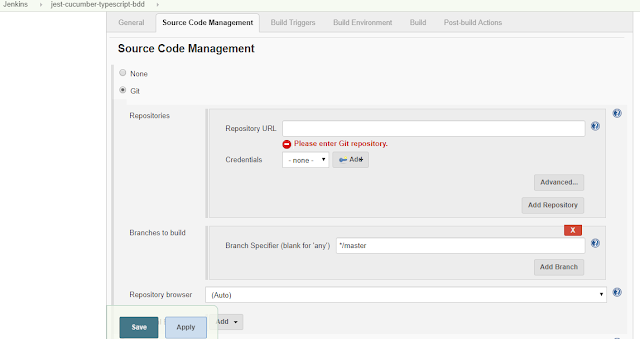
But the real trick is in enabling the access to the SCM for the tool.
Jenkins is an integrator that works on a different machine from the one where your code is hosted - eg., GitHub and so authenticating the CI tool to access the repository's status, code, scripts important and since Jenkins is a separate server by itself, credentials cannot be passed as is. So, what is required is for a secret that only the two tools know so that they could authenticate against a key generated using a standard cryptographic algorithm like a SSH key.


The difference between the various tools like Jenkins, Travis, Azure DevOps etc is in the way your build configuration is expected to be.
In Travis, for example, the travis.yml contains all the build steps in the form of a yaml script, which means that as long as the virtual machine understands the script, you can just about configure anything, from code coverage to tests to installation of npm packages or not, to running a mongod instance and test results as an Istanbul report, for example.
This configuration script is expected by Travis to be part of your code repository to which it is synchronized with. If there is no travis.yml then Travis will default to Ruby.
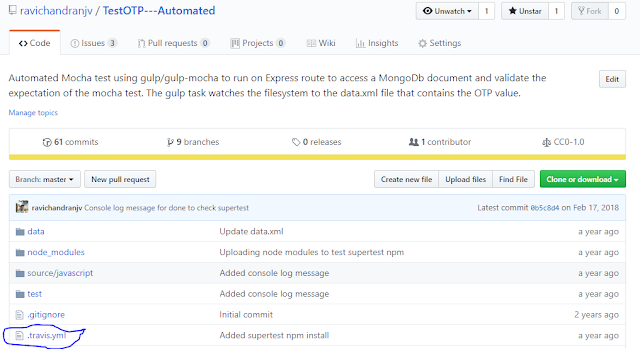


And the travis.yml script does many things like installing nodejs packages (which can also be set to ignore with a gitignore file in the repo), connecting to a mongodb instance and importing some json data to running a mocha test and providing a code coverage report.
Jenkins, on the other hand, provides for the build environment, build triggers and build actions and post actions within its interface. And since Jenkins gels well with Maven and the Java environment, its usage requires a good knowledge of the Java development tools, environment like maven, the JDK and the scripts to execute the build.


In frameworks like SAFe, that has a systems view, the importance of DevOps is immense especially when SAFe could encapsulate Behavior Driven Development (BDD), Test Driven Development (TDD), Scrum, XP, Kanban in itself to deliver a solution.
There are many ways of integrating code in a SCM repository but the key factor is in selecting the right tools to have an efficient set of pipelines to enable all aspects of the Agile Software Development Lifecycle.
Traditionally, Continuous Integration(CI) means checking out, checking in, committing code and to ensure that the build always succeeds and the code base is clean for the entire team to use, whenever, wherever and whichever tool they want to access the code from. However, things are not as hunky-dory as it looks because when you check out the tools that are available in the market, including the Cloud based ones, they appear to be free and easy to use so, at first glance, it does look all rosy.
For instance, Jenkins has a cool interface that clearly tells the user on which SCM repo to use.
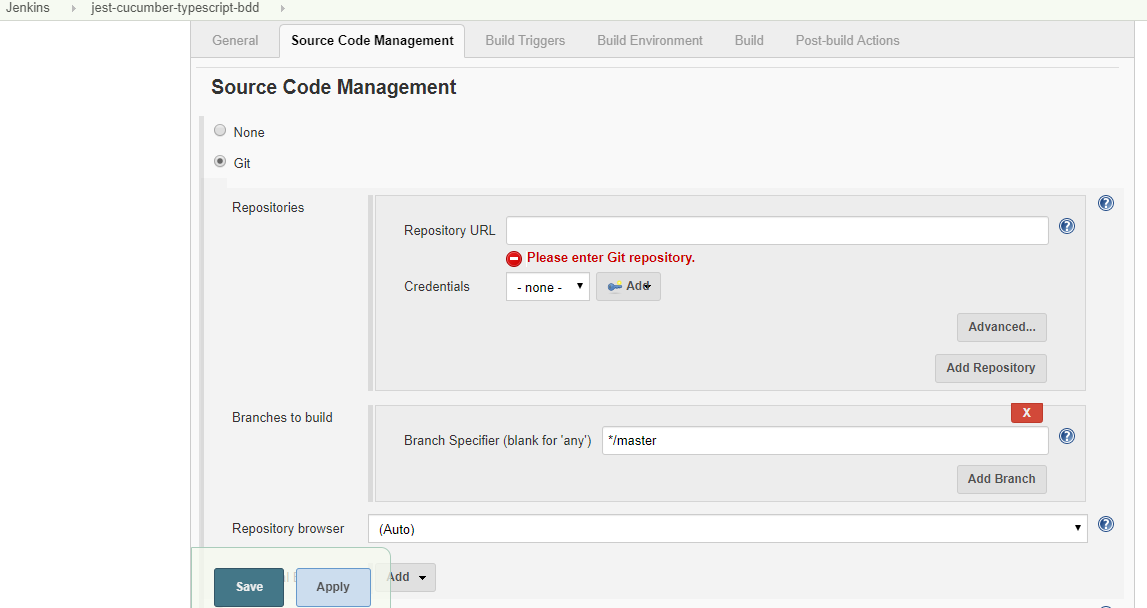
But the real trick is in enabling the access to the SCM for the tool.
Jenkins is an integrator that works on a different machine from the one where your code is hosted - eg., GitHub and so authenticating the CI tool to access the repository's status, code, scripts important and since Jenkins is a separate server by itself, credentials cannot be passed as is. So, what is required is for a secret that only the two tools know so that they could authenticate against a key generated using a standard cryptographic algorithm like a SSH key.

The same key is with the GitHub repository as part of your configuration of the GitHub account.

The difference between the various tools like Jenkins, Travis, Azure DevOps etc is in the way your build configuration is expected to be.
In Travis, for example, the travis.yml contains all the build steps in the form of a yaml script, which means that as long as the virtual machine understands the script, you can just about configure anything, from code coverage to tests to installation of npm packages or not, to running a mongod instance and test results as an Istanbul report, for example.
This configuration script is expected by Travis to be part of your code repository to which it is synchronized with. If there is no travis.yml then Travis will default to Ruby.
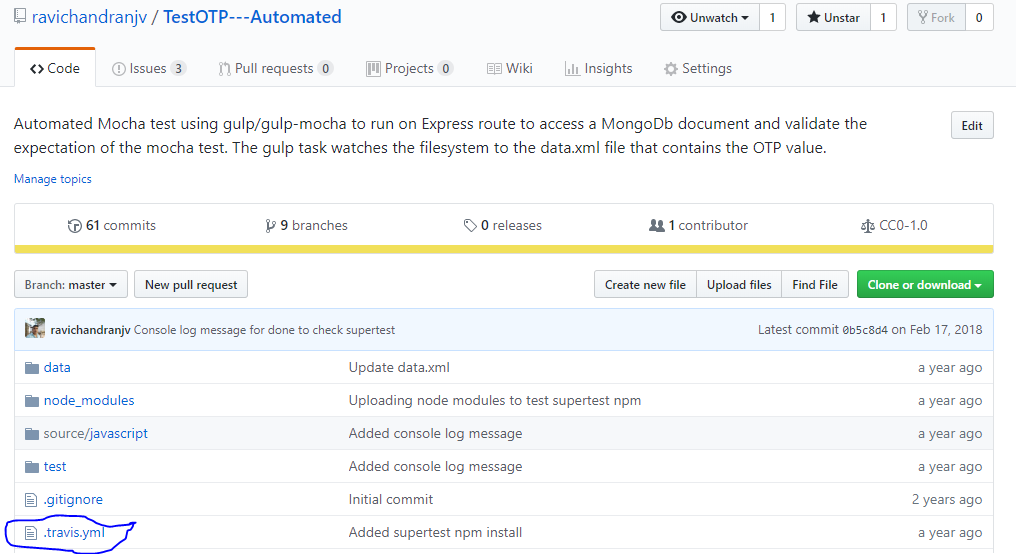
The travis.yml contains the script that tells the Travis CI container how to run the build.


Jenkins, on the other hand, provides for the build environment, build triggers and build actions and post actions within its interface. And since Jenkins gels well with Maven and the Java environment, its usage requires a good knowledge of the Java development tools, environment like maven, the JDK and the scripts to execute the build.


But unlike Travis, which is more suited for open source projects, Jenkins is a more specialized CI tool.
The commonality in all DevOps tools is in the integration of a CI tool with a SCM repository and with a Cloud storage container to enable Continuous Deployment (CD), the usage, though, will differ as per the depth in the software development process of the team.
Below are some important questions that could serve as a checklist when deciding on what kind of a DevOps environment that you want setup for your organization/team?
The commonality in all DevOps tools is in the integration of a CI tool with a SCM repository and with a Cloud storage container to enable Continuous Deployment (CD), the usage, though, will differ as per the depth in the software development process of the team.
Below are some important questions that could serve as a checklist when deciding on what kind of a DevOps environment that you want setup for your organization/team?
- Does the team wish to map its BDD or TDD into an automated environment?
- Is there an automated build that is wired with the testing framework and the code coverage tool ?
- Are deployments to the cloud monitored or automated and to what extent is quality ensured in the release to deploy?
- How often is the release to deploy planned?
- What are the planned pipelines in the build that cannot be ignored or skipped and who are the responsible members in the team?
- Does the responsibility or accountability in anyway compromise the agility in the team?
- What are the recovery mechanisms or policies in place for the CI/CD pipelines?
- To what extent does the organization want traceability from requirements to deployment?